Questions Answered
Why Am I On Fire for God One Week and Struggling the Next?

There are weeks when Bible study seems to come easily.
One passage raises another question.
That question leads to another passage.
A name leads to a place.
A place leads to a timeline.
A word leads to a deeper study.
Prayer feels natural.
There is genuine hunger to know God better.
Then another week comes.
The Bible has not changed.
God has not changed.
But the desire feels different.
Opening Scripture takes more effort.
Prayer becomes shorter.
Distractions become more appealing.
That raises an honest question:
Why can someone feel deeply hungry for God one week and struggle to seek Him the next?
And closely connected to that:
Does that mean something is wrong with their faith?
Scripture gives several verses that help answer the question.
Scripture Does Not Command Constant Spiritual Intensity
Christians often use phrases like:
“I’m on fire for God.”
Or:
“I’m spiritually dry.”
Those expressions may describe real experiences, but they are not the primary language Scripture uses to describe faithful Christian living.
The Bible repeatedly uses words like:
walking,
remaining,
continuing,
watching,
praying,
enduring,
holding fast,
obeying,
and following.
Those words matter.
They describe persistence.
They assume resistance.
There would be little need for endurance if following Christ always felt easy.
There would be little need to be told to remain if drifting were impossible.
There would be little need to watch if distraction and temptation were not real.
That shifts the question.
The Christian life may not be intended to be measured by constant emotional intensity.
Scripture places much more emphasis on faithfulness over time.
Jesus Said the Spirit Can Be Willing While the Flesh Is Weak
On the night before His crucifixion, Jesus went to Gethsemane with His disciples.
He told Peter, James, and John to remain nearby while He prayed.
When He returned, He found them sleeping.
Jesus said:
“Watch and pray that you may not enter into temptation. The spirit indeed is willing, but the flesh is weak.”
— Matthew 26:41
The context is important.
Jesus was not giving Peter an excuse.
He was warning him.
Peter may have sincerely wanted to remain faithful.
But sincere desire did not remove human weakness.
Within hours, Peter would deny knowing Jesus three times.
The passage shows an important distinction:
Wanting to be faithful and consistently acting faithfully are not always the same thing.
Someone can genuinely want to pray.
Genuinely want to study Scripture.
Genuinely want to obey Christ.
And still struggle with weakness.
Jesus’ instruction was not to trust willingness alone.
It was:
Watch and pray.
Galatians Describes Competing Desires
Paul gives another part of the answer in Galatians.
He writes:
“But I say, walk by the Spirit, and you will not gratify the desires of the flesh.”
— Galatians 5:16
Paul then describes the desires of the flesh and the desires of the Spirit as opposed to one another.
The word flesh in this passage should not simply be understood as physical tiredness.
Paul is describing fallen human desires that oppose the work and desires of the Spirit.
That means becoming a follower of Christ does not remove every competing desire.
Conflict remains.
Sometimes the struggle may not be a loss of belief at all.
It may simply be that something else feels more desirable in the moment.
Entertainment.
Comfort.
Distraction.
Scrolling.
Rest.
Work.
Something easier.
Something more immediate.
Paul’s instruction is not:
Wait until the spiritual feeling returns.
It is:
Walk by the Spirit.
Walking implies ongoing movement.
Jesus Warned That Other Things Can Choke the Word
The parable of the sower adds another important piece.
Jesus describes seed falling among thorns.
When He later explains the parable, He says:
“the cares of the world and the deceitfulness of riches and the desires for other things enter in and choke the word.”
— Mark 4:19
The phrase “desires for other things” is worth noticing.
Not everything that competes for attention has to look obviously evil.
Life can become crowded:
Work.
Money.
Responsibilities.
Entertainment.
Problems.
Plans.
Phones.
News.
Messages.
Schedules.
None of those things must automatically be sinful.
But they can occupy attention.
And attention is limited.
Mark 4 is about much more than personal Bible-reading habits, so the parable should not be reduced to that.
But the principle remains:
Other things can crowd out the Word.
That creates an important question when spiritual desire seems weaker:
Is something mysterious happening?
Or has attention simply been given almost entirely to other things?
Sometimes that question needs to be asked honestly.
Not Every Difficult Week Means Someone Is Living in Rebellion
There is also a danger in moving too far in the other direction.
A few days of weak concentration do not automatically prove that someone is living in hidden rebellion.
Human beings become tired.
They experience grief.
Fear.
Stress.
Pressure.
Physical exhaustion.
The account of Elijah in 1 Kings 19 is worth considering.
The previous chapter records the dramatic events at Mount Carmel.
Then Jezebel threatens Elijah’s life.
He runs.
Eventually he sits beneath a broom tree and asks that he might die.
What happens next is striking.
Elijah sleeps.
An angel wakes him and gives him food and water.
He lies down again.
He is fed again.
Only afterward does the account continue toward Elijah’s encounter with God at Horeb.
The point of 1 Kings 19 is not:
Take a nap and your spiritual problems will disappear.
Scripture does not say that.
But the account does remind us that servants of God are still human.
Physical exhaustion and emotional distress are real.
So it would be unwise to diagnose every fluctuation in spiritual motivation as evidence of some hidden spiritual catastrophe.
Sometimes sin may be involved.
Sometimes distraction.
Sometimes fear.
Sometimes exhaustion.
Scripture gives reason for self-examination without giving permission to invent explanations.
Psalm 42 Shows That Feelings and Faith Do Not Always Move Together
Psalm 42 gives a vivid picture of spiritual longing mixed with discouragement.
The psalmist begins:
“As a deer pants for flowing streams, so pants my soul for you, O God.”
— Psalm 42:1
Yet later he asks:
“Why are you cast down, O my soul, and why are you in turmoil within me?”
— Psalm 42:5
Longing for God and emotional discouragement exist in the same psalm.
That is important.
The psalmist does not pretend his emotions are somewhere they are not.
Instead, he tells himself:
“Hope in God.”
— Psalm 42:5
His feelings and what he knows to be true are not perfectly aligned.
Sometimes feelings move a person toward God.
Other times truth must lead even when the feelings have not caught up.
John 15 Points to Something More Stable Than Emotion
John 15 adds another major piece to the question.
Jesus tells His disciples:
“Abide in me, and I in you.”
— John 15:4
The word translated abide carries the idea of remaining, staying, or continuing.
That is different from a temporary burst of spiritual enthusiasm.
Jesus does not tell His disciples to remain emotionally intense.
He tells them to remain in Him.
Later in the passage, abiding is connected with His words remaining in them and with keeping His commandments.
That is far more stable than emotion.
Emotions can change quickly.
Abiding speaks to where a person remains.
That may mean “on fire” is not the best measurement of spiritual health.
Maybe “On Fire” Is the Wrong Standard
There are seasons when Scripture seems to open up everywhere.
Prayer feels natural.
Questions come quickly.
Bible study becomes exciting.
Those seasons can be a gift.
The problem comes when that experience becomes the standard by which every other week is judged.
A person may begin thinking:
Last week I wanted to study for an hour. This week I don’t. Something must be terribly wrong.
Possibly.
But Scripture seems to ask a different set of questions.
Are you remaining?
Are you still opening Scripture?
Are you still praying?
Are you still turning away from sin?
Are you still obeying what Christ has made clear?
Are you still seeking Him?
That is much closer to the language Scripture actually uses.
The Bible Talks About Endurance for a Reason
Hebrews tells believers:
“Let us run with endurance the race that is set before us.”
— Hebrews 12:1
The picture is not one short burst of energy.
It is a race.
And the race requires endurance.
Paul uses similar imagery in 1 Corinthians 9 when he speaks about running and discipline.
None of this means spiritual discipline earns salvation.
Salvation is by grace.
But grace does not make the Christian life passive.
The New Testament repeatedly calls believers to:
continue,
persevere,
watch,
pray,
obey,
and walk faithfully.
Those commands make sense precisely because those things will not always feel easy.
Sometimes Desire Follows Discipline
There is also a practical reality many people experience.
Someone may begin reading Scripture without much motivation.
Then one phrase catches their attention.
A question forms.
That question leads somewhere else.
Interest grows.
The desire was not strong before they began.
It developed after they began.
That is not a biblical promise.
Scripture does not guarantee that reading for five minutes will suddenly produce excitement.
It is simply an observation about how attention and desire can sometimes work.
But it does reveal a potential danger in waiting for motivation.
If a person only seeks God when they feel like seeking Him, then emotion becomes the deciding factor.
Scripture does not present emotion as the final authority.
Sin Must Still Be Taken Seriously
This question would be incomplete without addressing sin.
Sin can affect fellowship with God.
Hebrews warns believers about being hardened by the deceitfulness of sin.
Psalm 32 describes the weight of unconfessed sin.
1st John warns against claiming fellowship with God while walking in darkness.
So when spiritual desire weakens, it is appropriate to ask:
Is there something that needs to be confronted?
Is there known sin being justified?
Is there something Scripture has already made clear that is being ignored?
Is there something a person does not want God’s Word getting too close to?
That is different from simply being tired or distracted.
And Scripture does not allow sin to be explained away.
Where sin is present, the response is repentance and confession.
But Scripture also does not tell believers to invent sin where none has been exposed.
Honest examination is the better approach.
The Better Question May Be: What Do We Do When Desire Changes?
The original question is:
Why am I on fire for God one week and struggling the next?
That is a fair question.
But Scripture may point toward an even more useful one:
What should a believer do when spiritual desire changes?
Jesus says: Watch and pray.
Paul says: Walk by the Spirit.
Jesus warns that other desires can choke the Word.
The psalmist says: Hope in God even while the soul is discouraged.
Jesus says: Abide in Me.
Hebrews says: Run with endurance.
None of those commands requires someone to pretend their emotions never change.
They tell believers how to respond when they do.
Faithfulness May Be Clearest on the Days It Does Not Feel Easy
When there is a strong desire to study Scripture, opening the Bible is easy.
When prayer feels natural, praying is easy.
Those are good days.
But the harder days matter too.
The mornings when the phone seems more appealing.
The nights when exhaustion is real.
The days when prayer feels ordinary.
The moments when there is no dramatic spiritual feeling at all.
Those are the moments when a deeper question appears:
Does faithfulness depend on emotional momentum?
Scripture points toward a different answer.
Seek God anyway.
So Why Does It Change From Week to Week?
Scripture does not appear to give one universal answer.
For one person, the issue may be distraction.
For another, sin.
For another, competing desires.
For another, exhaustion, grief, fear, or pressure.
Several of those may exist at the same time.
What Scripture does make clear is that:
weakness is real,
competing desires are real,
distraction is real,
sin is deceptive,
and endurance is necessary.
The goal, then, may not be maintaining one uninterrupted emotional high.
The goal is remaining with Christ through every change in emotion.
What This Means Practically
There is no need to manufacture spiritual excitement.
There is no need to pretend hunger exists when it does not.
But there is a need for honesty.
If there is sin, deal with it.
If there is distraction, remove it.
If there is exhaustion, acknowledge it.
If Scripture feels difficult to open, open it anyway.
Not because reading a certain number of chapters makes God love someone more.
Not because Christianity is a streak to maintain.
But because Jesus calls His followers to remain in Him.
There will likely be seasons of intense spiritual hunger.
There may also be seasons of struggle.
Maturity may not mean eliminating every fluctuation in desire.
It may mean learning how to respond when the fluctuation comes.
Do not run.
Do not wait for a feeling.
Do not pretend.
Examine yourself.
Pray honestly.
Open Scripture.
Remain.
And keep seeking.
Scripture references
Matthew 26:36–46
Mark 4:1–20
Galatians 5:16–26
1 Kings 18–19
Psalm 42
John 15:1–11
Hebrews 3:12–14
Hebrews 12:1–3
Psalm 32:1–5
1 John 1:5–10
1 Corinthians 9:24–27
Continue the inquiry
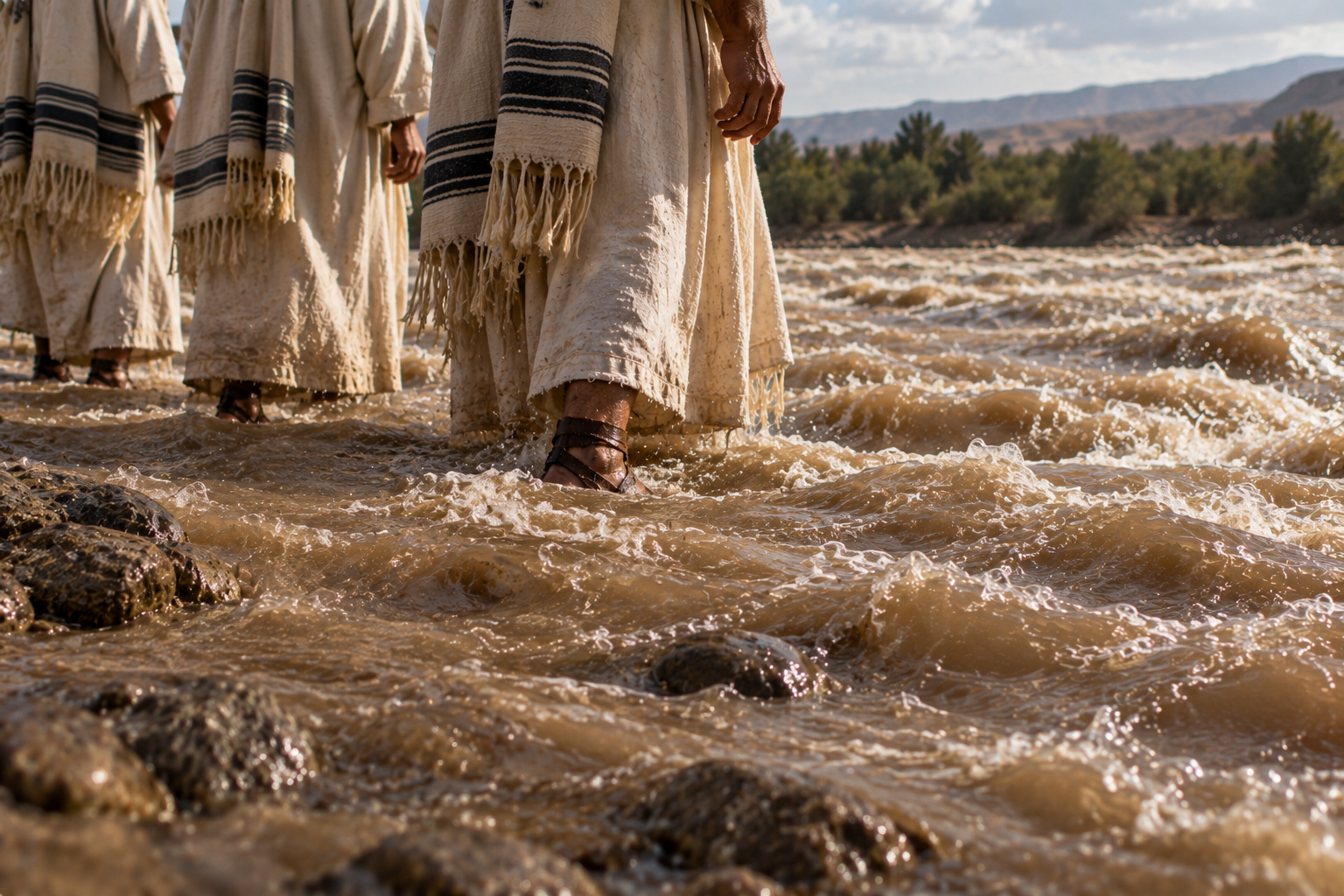
Wet Sandals at the Jordan
Joshua 3–4 records Israel crossing the Jordan while the river was overflowing its banks. Before the waters were cut off, the priests carrying the Ark of the Covenant had to reach the river and step into its edge. Slowing down and looking carefully at the details makes this familiar account feel remarkably real.
Read the answer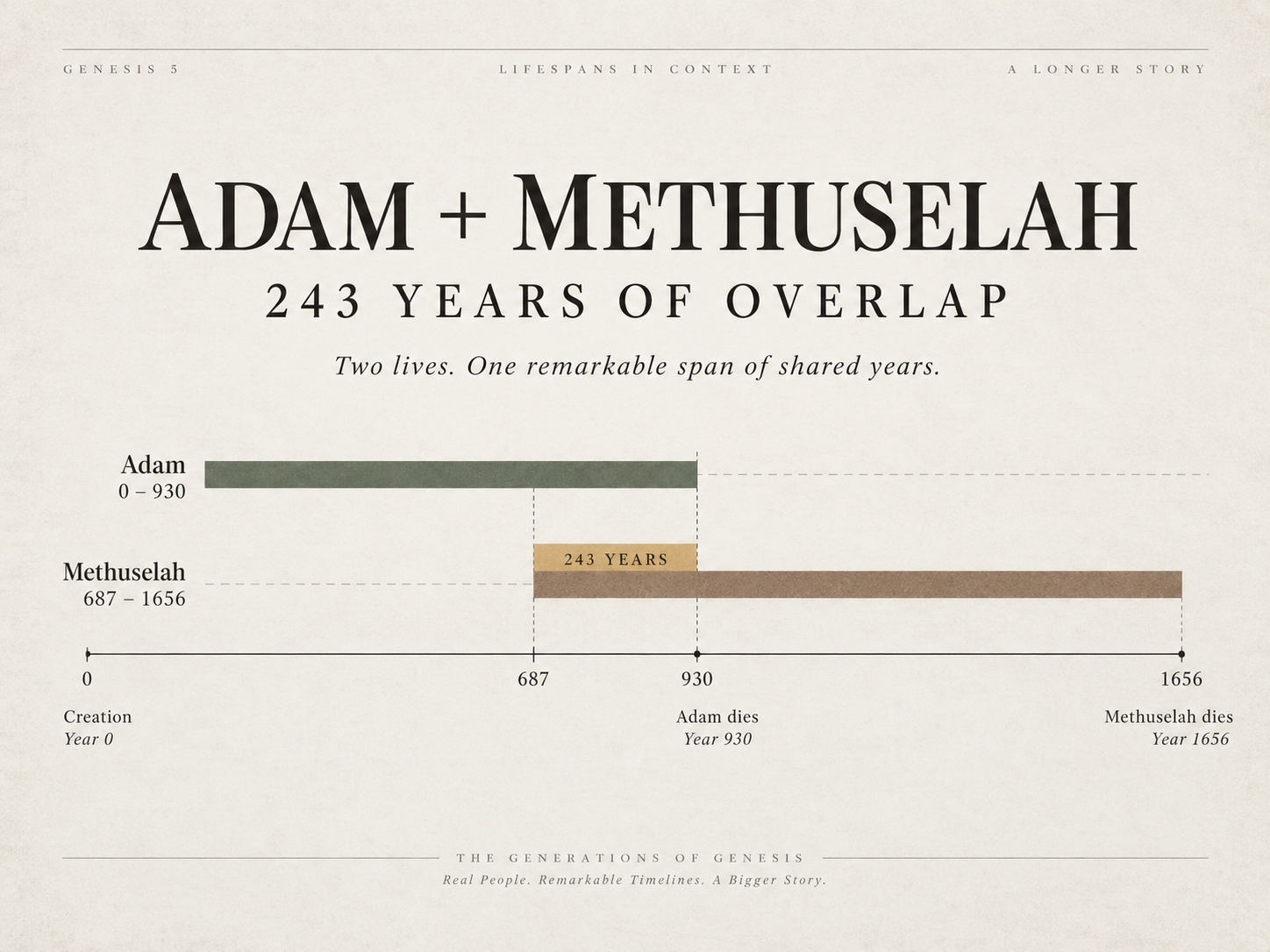
Adam and Methuselah Were Alive at the Same Time
According to the ages recorded in Genesis 5, Methuselah was already 243 years old when Adam died. That surprising overlap connects Adam's generation much more closely to Noah's than we might imagine.
Read the answer